Ella Duffy & Adam Horovitz in conversation
There’s a particular kind of magic that happens when a book is born out of conversation - when ideas are shaped not in isolation, but in the lively, generous space between people. We invited poets Ella Duffy and Adam Horovitz to collaborate on a poetry pamphlet and Rock, Paper, Scissors began not as a theme but as a gesture - a shared impulse toward play, risk, and the unpredictable pleasures of collaboration. When two poets decide to write through a game, they inherit its rules, its rhythms, and its surprises. They also inherit its intimacy: the raised hands (even if virtual!), the moment of suspense before revelation, the quiet thrill of not knowing what the other will throw next.
In this project, the game became both method and metaphor. Each round shaped the poems that followed; each ‘win’ or ‘loss’ nudged the sequence into new territory. What emerged was not a competition but a conversation - one that moved from hand to page, from constraint to invention, from the familiar triad of rock, paper, scissors into a widening field of images, echoes, and shared imaginative leaps. We couldn’t be more delighted with the results.
In the interview that follows, the poets reflect on how the game structured their writing, how surprise became a generative force, and how collaboration dissolved the very idea of victory. Their answers reveal a process that is playful, rigorous, and full of the unexpected - much like the game itself.
Why Rock, Paper, Scissors?
The project started with the idea of play — not just playfulness, but actually play, with its elements of chance, rules and surprise. . Since this was a collaboration between two poets, it needed to be a game that only two could play. Dialogue was also important, and rock, paper, scissors offered this through gesture. It began with the hands and continued on the page. As in any good game that draws upon a well-established set of rules, we found ourselves inventing rules mid-game to allow room for ongoing ease of collaboration and good humour and to make space for poetry and thought to flourish.
How did you approach the competitive element of the game?
To decide who would write first, we played a game of rock, paper, scissors on Zoom (a challenge in itself, given the lag between connections). Ella won and wrote the opening poem, after which we alternated victories for six poems at the start of the sequence and six poems at the end of the sequence. In the pamphlet's middle section, however, we played rock, paper, scissors before each round of poems to determine the winner; occasionally we drew. We decided early on that, though the nature of the game we were playing was inherently competitive, we didn’t want to end on a note of victory or loss, so we handed the pamphlet's close over to Juliette, along with a pair of scissors, and asked her to create a crowning poem for the sequence out of equal parts of our previous poems, thereby dissolving all sense of competition.
What was your favourite - rock, paper or scissors?
Ella — Rock. The gesture of it appealed to me: the fist thumping into the open palm like the arrival of a new idea.
Adam –– I found Rock came quickest when it was my turn to write it, but that Scissors took me off <snip snap> in pleasing directions and that I became quite rapt by the possibilities of paper. So I can’t decide, and I can’t play myself at Rock, Paper, Scissors to ease the decision-making process either...
Were the subjects restricting?
Challenging more than restricting — having to repeatedly approach the same three subjects afresh, avoiding repetition. Not that restriction is necessarily a bad thing, anyway. The restrictions of a particular rhyme scheme or meter can push unexpected ideas out of a brain and a pen; the restrictions of a rock fallen in a river can alter the water’s course irrevocably. Sometimes we had to push our brains hard against the poems we had to follow and chase along a suddenly altered course. The challenge and the restriction were part of the thrill.
In what ways did this collaboration surprise you?
The collaboration contained the same element of surprise as the game itself. Each poem arrived as unexpectedly as the winning hand. Writing a ‘losing’ poem could be revelatory; we endeavoured to express the loss of a round as subtly as possible, and in so doing found that we were setting up symbols and images that informed later poems in unexpected ways. This had the added advantage of allowing us to not worry about victory or loss; instead we were daring each other to raise the stakes for the next poems.
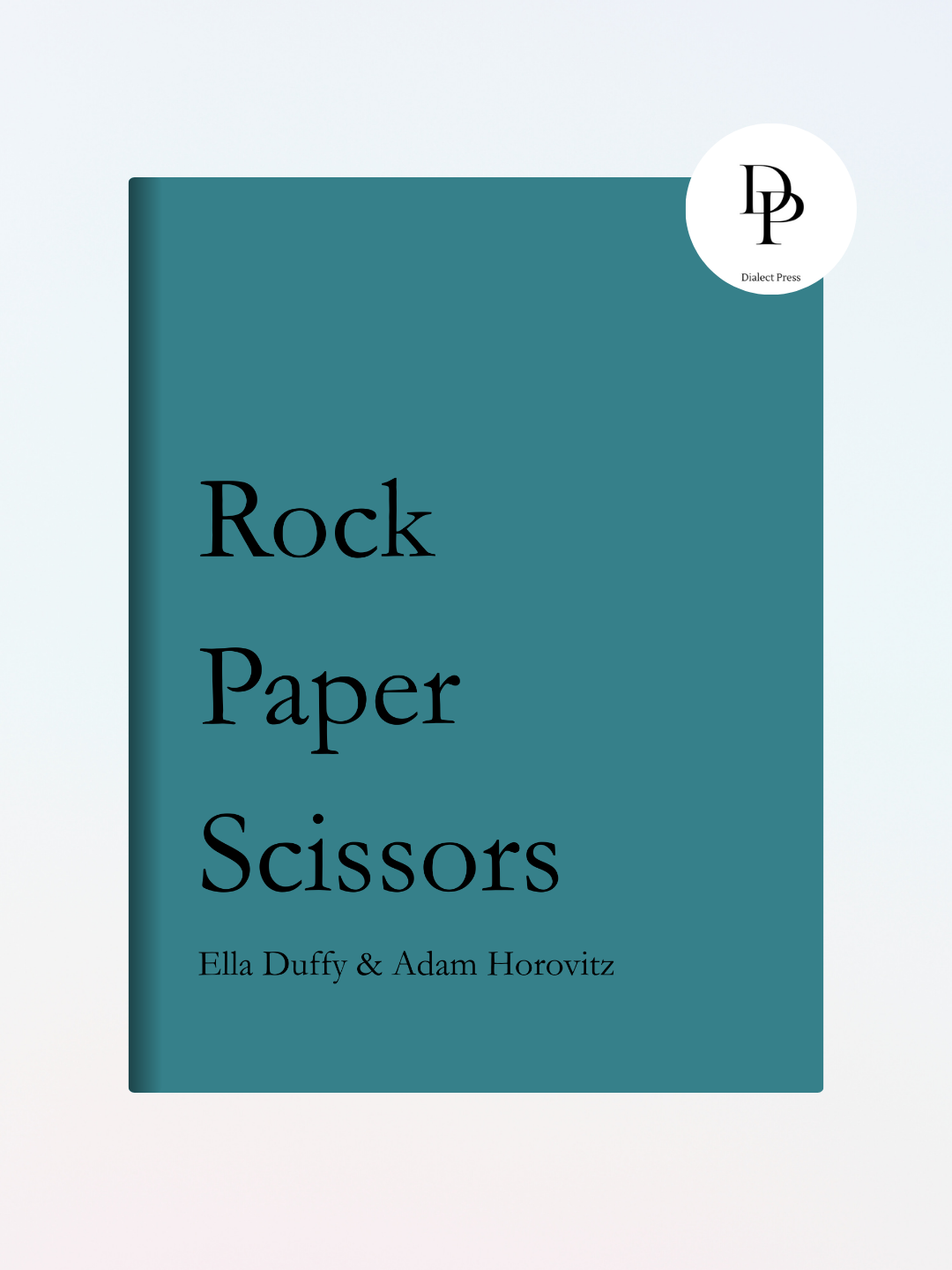
We would love you to join us for the online launch of Rock, Paper, Scissors - tickets are free but you will need to book so that we can send you the Zoom link. Click this link to book. Ella and Adam will be launching their pamphlet alongside Lucy Holme and Vasiliki Albedo’s new book, Sardines. More info on that soon.
Rock, Paper, Scissors launches on 2nd February 2026 and will be published in a limited edition. We expect the pamphlets to fly out of the door - preorders are open now! See our bookshop for details.
More about our authors…

Ella Duffy
Ella Duffy is the author of Rootstalk (Hazel Press), New Hunger (The Poetry Business) and Greencombe (Hazel Press). Her work has appeared in The Poetry Review, The London Magazine, The Rialto, Ambit and Poetry Ireland Review, among others. She is the editor of botanical poetry anthology, Seeds & Roots (Hazel Press), and has been a guest editor for Butcher’s Dog and Magma.
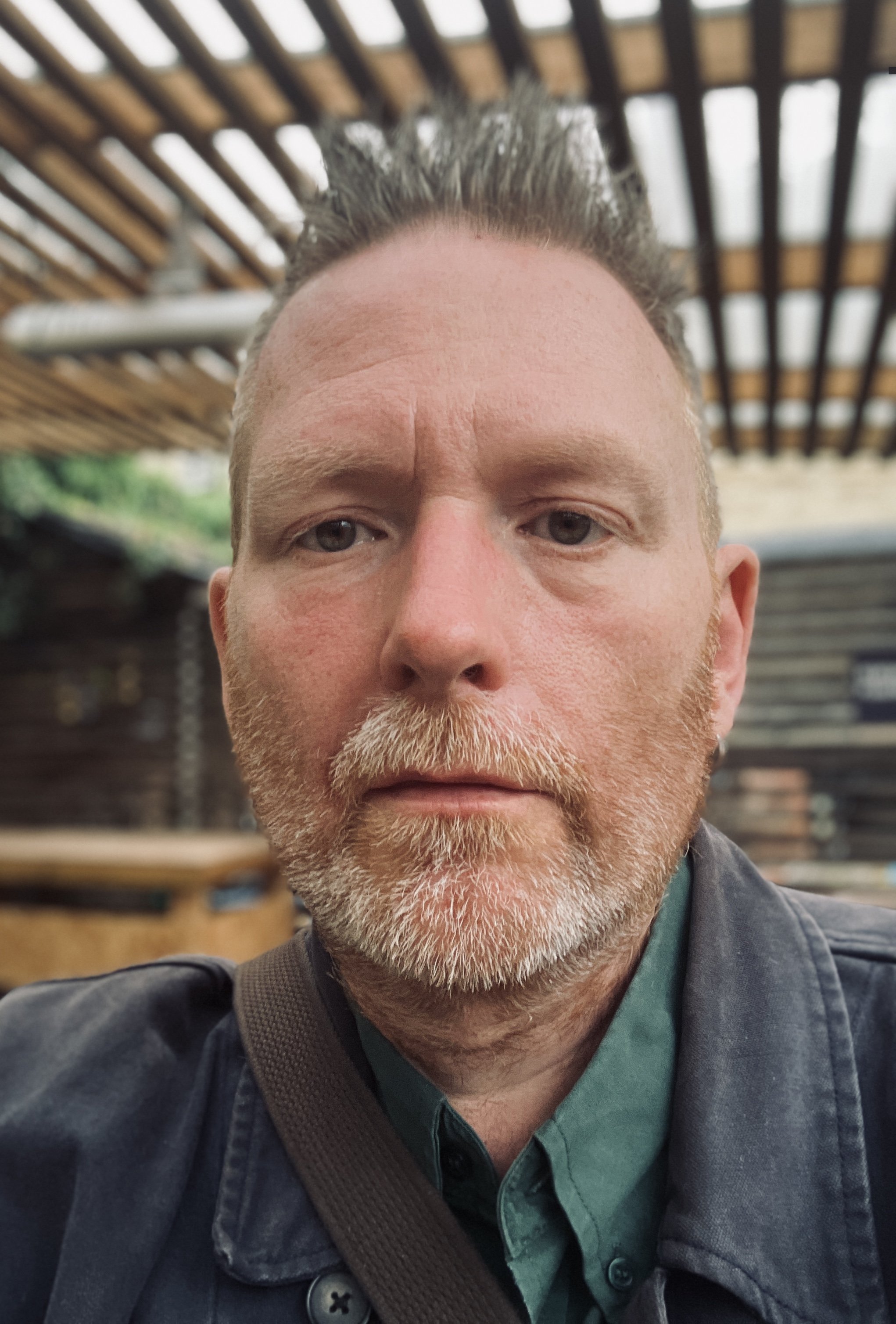
Adam Horovitz
Adam Horovitz is a poet, performer and editor. He has published three collections of poetry, the most recent being Love and Other Fairy Tales, a memoir, A Thousand Laurie Lees, and an album of poetry and music with Josef Reeve, Little Metropolis. He co-presented The Thunder Mutters, a podcast celebrating John Clare, with fiddle player Becky Dellow during lockdown. He appeared on Cerys Matthews and Hidden Orchestra’s album We Come From the Sun in 2021. His latest book, Slow Migrations, is out with Indigo Dreams (2025).